Hedge Maintenance Tips + Professional Care Guide (Seattle Arborist)

Written By: Eric Ledford
ISA Certified Arborist – PN-9290A
ISA Qualified Tree Risk Assessor (TRAQ)
Updated April 21, 2026
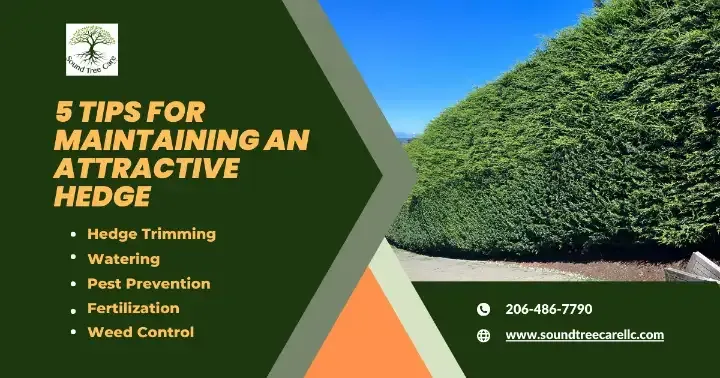
5 Hedge Trimming & Maintenance Tips From a Certified Arborist
Proper hedge maintenance is essential for keeping hedges healthy, dense, and visually appealing over time. Without regular care, hedges can become thin, overgrown, or prone to pest and disease issues.
In this guide, a Seattle ISA Certified Arborist shares practical hedge maintenance tips, including trimming schedules, watering, fertilization, weed control, and pest management. These recommendations apply to common Pacific Northwest hedges such as laurel, cedar, boxwood, yew, and privacy hedges of all sizes.
1️⃣ ✂️🌿 Hedge Trimming Schedule: How Often Should Hedges Be Trimmed?
Regular pruning is the foundation of hedge maintenance. Pruning encourages healthy growth, shapes the hedge, and prevents it from becoming overgrown or uneven. Start by removing dead, damaged, or diseased branches. Then trim the hedge to your desired shape and size using sharp and clean pruning tools. Avoid pruning and trimming during periods of active growth to prevent excessive stress on the hedge.
When and how to
trim your hedge varies depending on the plant species. For example, flowering hedges require different pruning techniques than coniferous hedges. Research your hedge species and their care requirements before pruning.
Maintaining a regular pruning schedule by a professional company ensures proper pruning structure and long-term hedge health. If your hedge has become overgrown or uneven, our
Seattle hedge trimming services provide corrective pruning, seasonal shaping, and long-term maintenance programs.
2️⃣
💧🌱 Watering Tips for Healthy Hedges
Proper watering is essential for maintaining an attractive and healthy hedge. Water deeply but infrequently, ensuring the roots receive sufficient moisture without becoming waterlogged. During dry periods, thoroughly water the ground around the hedge base and drip zone, allowing the water to penetrate the root zone. Be mindful of local
watering restrictions and adjust watering frequency based on seasonal weather conditions.
Poor watering habits are one of the most common causes of hedge decline we diagnose during tree risk assessments in Seattle—especially in newly planted privacy hedges.
3️⃣
🧪🌳 Fertilizing Hedges for Healthy Growth
Fertilizing your hedge provides essential nutrients for healthy growth and vibrant foliage. Apply a slow-release, balanced fertilizer formulated for hedges, following the manufacturer’s instructions. Fertilize in early spring or late fall when the hedge is not actively growing. Avoid over-fertilization, as excessive nutrients can lead to rapid growth.
Your local nursery, arborist, or tree care specialist can help you select the right fertilizer for your hedge and provide guidance on its proper application.
4️⃣
🚫🌾 Weed Control Around Hedges
Weeds can compete with your hedge for water, nutrients, and sunlight, compromising health and appearance. Regularly inspect the base of the hedge and surrounding areas for weed growth. Remove any weeds by hand,
removing the roots to prevent regrowth. Applying a layer of
mulch around the base of the hedge can help suppress weed growth and retain soil moisture.
5️⃣
🐞🦠 Common Hedge Pests and Diseases
Proactive pest and disease management are crucial for maintaining the vitality and attractiveness of your hedge. Regularly inspects the foliage and stems for signs of
pests, such as aphids or scale insects, and promptly address any infestations using appropriate insecticides or natural remedies. Monitor for common
diseases like powdery mildew or fungal infections, and consult with a professional tree care company if needed.
IMPORTANT: Some pests are invasive and monitored by
Washington Invasive Species Council (WISC). Before taking action, contact them. They can identify the pest and help you treat the infestation. If your hedge is already showing signs of dieback, thinning, or fungal spread, an
ISA-certified arborist consultation can determine whether pruning, plant health care, or full replacement is the most cost-effective solution.
Maintaining An Attractive Hedge Requires Dedication and Regular Care.
Following these five expert tips, you can keep your Seattle area hedge healthy, vibrant, and aesthetically pleasing. Regular pruning, adequate watering, fertilization, weed control, and pest management are the pillars of
hedge maintenance and trimming. Remember to tailor your approach based on the specific needs of your hedge species and local environmental conditions. A well-maintained hedge enhances the beauty of your landscape and adds privacy and
value to your property.
Professional Hedge Maintenance Services in Seattle
While proper hedge maintenance can be handled by homeowners, many properties require professional care to maintain structure, safety, and long-term plant health.
Our ISA Certified Arborists provide:
- Seasonal hedge trimming and shaping
- Large privacy hedge reductions
- Corrective pruning for overgrown hedges
- Long-term hedge maintenance programs
If your hedge is becoming difficult to manage or impacting nearby structures, professional maintenance ensures proper pruning techniques and long-term results.
When to Hire a Professional for Hedge Maintenance
While routine hedge trimming can be handled by homeowners, there are many situations where hiring a professional is the safer, more effective, and more cost-efficient option. Improper pruning techniques can lead to long-term damage, poor regrowth, or even permanent decline in hedge health.
You should consider hiring a professional arborist if your hedge falls into any of the following categories:
- Hedges over 12–15 feet tall
Larger hedges require ladders, climbing, or specialized equipment to trim safely and evenly. - Uneven or previously topped hedges
Poor past pruning often leads to irregular growth that requires corrective pruning techniques to restore structure. - Encroaching on structures, fences, or sidewalks
Hedges growing into buildings, roofs, or public walkways can cause damage or create safety and compliance issues. - Declining health, thinning, or pest issues
Yellowing leaves, dieback, or sparse growth may indicate underlying problems that require professional diagnosis and treatment. - HOA or city compliance concerns
Properties in Seattle and surrounding areas may need to meet clearance requirements or follow specific pruning guidelines, especially near streets or in regulated zones. - Hiring an ISA Certified Arborist ensures your hedge is trimmed correctly, safely, and in a way that promotes long-term health and structure. Professional maintenance can also prevent costly restoration work in the future.
Not Sure If Your Hedge Needs Professional Maintenance?
If your hedge is overgrown, uneven, thinning out, or starting to interfere with sidewalks, fences, or structures, it may be time for professional care. Our ISA Certified Arborists can assess the hedge, identify pruning needs, and recommend the most effective path forward.
- Seasonal hedge trimming and shaping
- Corrective pruning for overgrown hedges
- Large privacy hedge reductions
- Long-term hedge maintenance plans
Serving Seattle, Bellevue, Renton, Kent, Tacoma, and surrounding areas.
💬 Hedge Trimming FAQs — Answers from Certified Arborists
Whether you're dealing with hazardous limbs, storm-damaged trees, or seasonal pruning, our ISA Certified Arborists are here to help. These FAQs cover the most common hedge trimming and maintenance questions homeowners ask us across Seattle, Bellevue, Tacoma, and the greater Puget Sound region
If you don’t see your hedge trimming question here, just reach out — we’re happy to assist.
❓How often should hedges be trimmed in Seattle?
Most hedges in the Seattle area should be trimmed 2–3 times per year, depending on the species and growth rate. Fast-growing hedges like laurel or privet may need trimming every 8–12 weeks during the growing season, while slower-growing species can be maintained with one or two trims annually. Regular trimming keeps hedges dense, healthy, and properly shaped, and helps prevent the need for more aggressive corrective pruning later
❓Can overgrown hedges be restored?
Yes, many overgrown hedges can be restored, but the success depends on the species, condition, and how long they’ve been neglected. Hardy species like laurel, yew, and privet often respond well to corrective or restorative pruning, even after significant overgrowth. However, some hedges may require staged reductions over multiple seasons to avoid stress. In severe cases where structure or health is compromised, partial or full replacement may be the better long-term solution.
❓Do I need a permit to trim hedges in Seattle?
In most cases, you do not need a permit for routine hedge trimming on private property. However, permits or additional regulations may apply if the hedge is located in a public right-of-way, within an Environmentally Critical Area (ECA), or if it is part of a regulated tree protection plan for development. Hedges that impact sidewalks, streets, or visibility must also meet city clearance requirements. If you’re unsure, it’s best to consult with an arborist to ensure your project stays compliant with Seattle regulations.
❓Is hedge trimming regulated in Seattle?
Hedge trimming is generally not heavily regulated in Seattle, but there are important exceptions. Hedges located in the public right-of-way (such as planting strips) must maintain clearance for sidewalks and visibility for traffic. Additionally, properties in environmentally critical areas (ECAs) or with designated trees may have restrictions on pruning intensity. If your hedge is near a street, sidewalk, or part of a larger development project, it’s a good idea to consult with an arborist to ensure compliance with local codes.
❓What is the difference between hedge trimming and hedge maintenance?
Hedge trimming refers to the physical cutting and shaping of a hedge to control its size and appearance, typically done a few times per year. Hedge maintenance, on the other hand, is a broader service that includes trimming along with plant health care, fertilization, pest management, irrigation monitoring, and long-term care planning. In short, trimming is one part of maintenance, while maintenance ensures the hedge stays healthy, dense, and structurally sound over time.
❓How much does hedge maintenance cost in Seattle?
Hedge maintenance in the Seattle area typically ranges from $200 to $1,500+ per visit, depending on the size, height, and condition of the hedge. Small, regularly maintained hedges are on the lower end, while large privacy hedges or overgrown hedges requiring ladders, climbing, or corrective pruning will cost more. Factors like debris removal, access, and frequency of service also impact pricing. Ongoing maintenance plans can often reduce long-term costs compared to one-time cleanups.
How Much Does Hedge Maintenance Cost?
The cost of hedge maintenance varies depending on the size, height, accessibility, and condition of the hedge, but most homeowners in the Seattle area can expect to pay anywhere from $200 to $1,500 or more per visit. Small ornamental hedges are typically on the lower end, while large privacy hedges, overgrown hedges, or those requiring ladder or climbing work will cost more due to increased labor and safety considerations. Additional factors like debris removal, corrective pruning, and ongoing maintenance plans can also affect pricing. For the most accurate estimate, it’s best to have an ISA Certified Arborist assess your hedge and provide a tailored recommendation based on your property and goals.
🌲Ready to Get Your Hedge Back Under Control?
If your hedge has become overgrown, uneven, or is causing clearance issues with sidewalks, structures, or neighboring properties, our ISA-certified team can help.
✅ Seasonal Hedge Trimming
✅ Large Privacy Hedge Reductions
✅ Corrective & Restorative Pruning
✅ Long-Term Maintenance Programs
🌟 ISA Certified Arborists | TRAQ-Qualified
🌟 5-Star Reviews on Google, Yelp & Facebook
🌟 Licensed, Insured & City-Compliant
🌟 Trusted by Homeowners Throughout Sammamish
📞 Call us now at
206-486-7790 – Speak with a local arborist!
📝 Request an Online Quote:
Client Hub
📍 Serving all of Seattle, Bellevue, Renton, Kent, Tacoma and more local cities